Due to 4th of July celebrations, I'll recap stages four and five tomorrow. In the meantime, here are three photos from stage four:
Andre Greipel wins the sprint for the stage; his leadout team celebrates in the background.
Fans along the route often dress up in kooky ways, hoping to catch the helicopter camera's attention as it passes over. I have genuinely no idea what these people are up to.
There are a gajillion versions of this shot.
Photos via AP and Reuters
Showing posts with label cycling. Show all posts
Thursday, July 5, 2012
Wednesday, July 4, 2012
2012 Tour de France: Stage Three
Some days in the Tour everything seems easy. The boulevards for the sprints are expansive. The countryside across which the peloton churns en route to the finish is paved with broad, pleasant roads. The descents are sweeping, the route wide open. The riders can relax, and worry only about their legs and the rest of the field. On other days, today very much included, everything seems just a little too small. The roads are narrow, packing the peloton into each other and increasing the risk of two riders bumping tires and touching off a pileup. The sprints are interrupted by curves, bunching the riders at the least opportune moment, when the speed is highest and the margin for error is smallest. When such a day falls in the first week of the Tour, before the pack has settled into itself, the claustrophobia lends to a skittishness that, perversely, causes the crashes the riders are worried about.
On a narrow lane like those of stage three, any rider in the peloton going down immediately creates a clusterfuck behind him. Those immediately following can’t help but hit him and go down, and a shockwave spreads behind and out through the riders coming upon him. At low speeds, it’s a traffic jam. At high speeds, it can become a meat grinder. Today there were four crashes on the road, and the first dropouts of the Tour were forced. A fractured tibia and collarbone knocked two riders out, and a third broke his hip and, though he finished the stage, seems likely to be done. Some poor anonymous bastard was ejected off of the road and rolled hard into a wire fence. Countless riders went down protected only by their helmets and lycra. It’s not a contact sport, but when it goes wrong it goes wrong hard.
But, of course, the race continues unabated amid crashes. If a true contender goes down in or is held up behind a crash, etiquette dictates the pack wait for him, but otherwise the race is ruthless, and anyone caught in an accident gets to follow it with a frenzied ride to reattach himself to the back of the peloton, hopefully with the aid of others also caught out by the crash.
So on the race went. Things are still early, and the heavyweights are still feeling out this year’s version of the Tour, more concerned with not making a mistake than with trying anything. The peloton caught the breakaway on one of the several climbs near the finishing climb of the race, and then wound up to race to the finish.
On the downhill after the climb, with four kilometers left, Sylvain Chavanel broke from the head of the race to try to go it alone. It wasn’t an impossible move, but it was a desperate one. Chavanel is a French racer, which is currently a romantically doomed lot in cycling. France loves cycling, and would explode if a Frenchman were to win the Tour, but they haven’t produced a champion since the 80s. When Thomas Voeckler held onto the maillot jaune for 10 days last year he became a national hero. Chavanel’s move off the front was ill-advised, but he isn’t a strong enough rider to contest the sprint on the final climb, and today was the day the Tour was back on French soil, so of course he had to make a move. He held them off until the penultimate climb, but then he faded. It was valiant, it was a bold strategic play, but it was never going to work.
And so, instead of a world-beating French victory, we have a phenom. Twenty-two year-old Peter Sagan, who you might remember from his fine double teapot-to-chicken victory celebration in stage one, outkicked the field on the final uphill to win his second stage. If this is all he does in this year’s Tour, he is a young rider with a bright future. If he can win a handful more times this convincingly, he will have forcefully inserted himself into the conversation for who can win the green jersey for best sprinter. Either way, he has the best victory celebrations going right now. As he crossed the line at the end of stage three, he pumped his arms like a runner. (I'm sorry I can't embed videos of these, but ASO seems to treat YouTube much like MLB does.) Most riders appeal to god like home run hitters touching the plate or throw their arms wide; Sagan is just trying to entertain. He termed today’s the Gump, saying that like Forrest Gump ran when he was told to run, he will win when he is told to win. We’ll see if that remains true, but so far his results are unassailable.
Photos via Reuters
Labels:
2012,
crashes,
cycling,
Peter Sagan,
Tour de France
Tuesday, July 3, 2012
2012 Tour de France: Stage Two
Topology is destiny in any bike race, and stage two today was as pure a sprint stage as you’re likely to find. Such things when they play to form, and they nearly always do, are an act in two parts.
The first act is the leisurely day out. A small breakaway escapes the peloton, and has a day on the lam. Once they’ve established an adequate gap over the peloton, everyone settles in. Today, three riders won themselves a day away from the pack, galavanting off the front to poach climb and intermediate sprint points, three riders too young or marginal for anyone to worry about their lead on the field sticking over the course of the day. They cruise along, working hard but getting to spend their few stolen hours on television, while the rest of the riders have an easy day on flat terrain. Those of us following along at home are treated to some UNESCO World Heritage Site and a few top-notch chateaus. Everything goes smoothly for all parties.
The second act is the chase and gathering storm. As the distance remaining dwindles, the truly fast men move to the front of the peloton and raise the speed. The break riders may bury themselves trying to stay free, but they’re doomed. The peloton surges down the road like a wave, riders revolving onto the front while all try to move to the front of the pack. Today Cadel Evans’ BMC teammates set the pace for him for a good stretch, not to position him for the sprint but to keep him in front of any trouble. At some point near but not actually close to the finish, the peloton subsumes the break riders, tired from their day, and just as quickly ejects them from its rear. The teams vying for the spring victory peel through their riders like a car accelerates upwards through its gears, with each rider leapfrogged by his faster peer until the team’s true alpha speedster is delivered at the front, a few hundred meters from the finish line.
There is a pleasant opacity to the mechanics of who wins a field sprint victory. The leadout trains that carry the top dogs to the finish line are perfectly evident, but the proportions in the mixture of physical form, tactical savvy, and luck that dictate victory are totally unknowable. The concreteness that a settled result lends to circumstance sets the winner in amber, makes all successful moves feel predestined. Today World Champion Mark Cavendish burnished his reputation as the best sprinter in the sport, freelancing onto his rival Andre Greipel’s rear wheel in the last stretch, and then timed his passing move perfectly to earn the win. Did he play his legs perfectly? Did Greipel just not have quite as much in him today? It doesn’t matter, because the day is his now.
Photo via Reuters
Labels:
2012,
cycling,
Mark Cavendish,
sprinting,
Tour de France
Monday, July 2, 2012
2012 Tour de France: Prologue and Stage One
Prologue:
The Tour de France starts with a short time trial, because it has to start somehow. It also starts in Belgium this year, because its organizers like to spread the wealth around a bit and don’t worry too much about the literal truth of the names of things. It’s always a short course, 6.4 km this year, and no significant time is gained or lost. The riders race the course alone, staggered by a large enough time gap that they don’t meet each other on the course. This year the prologue had several tight turns but no climbs, so it favored the time trialists who have good bike handling skills and can quickly accelerate up to speed out of a turn over the pure horsepower riders who can churn a large gear endlessly. Not much of import is decided in the prologue, but it’s always fun to see the riders decked out in their TT gear, looking like neon insectoid aliens in the skinsuits and teardrop helmets, crouched in their wind-tunnel positions on their aero bikes, and the winner gets to wear the first maillot jaune of the year.
Because the course is so short, every rider gets the luxury of riding for himself, for glory. In a longer time trial the riders with no chance of noteworthy result are obligated to ride hard enough to beat the time cutoff but otherwise conserve energy, but in the prologue every man is straining against his limits. Some because they could win, but all because it’s the first day of the new Tour de France, whether it’s their first or seventeenth1, so you give it what you’ve got.
1: Apparently the seventeenth Tour is the golden carbon bike anniversary?On such a course, Fabian Cancellara wins. It’s nice that they compete, that everyone gets a chance, but of course he wins. The man is nicknamed Spartacus, and no one thinks it’s ironic or funny. There was a kerfuffle a couple years ago in which he was accused of using a secret electric motor in his bike to win two spring classics in decisive fashion. He doesn’t have the top speed of the drag race sprinters, but over any real distance, he’s unstoppable, and this year's prologue was no exception. It's the fifth year he's won the first yellow jersey, tying him with Bernard Hinault for the all-time lead. If there’s a secret Swiss lab pumping out polite, discrete, dominant athletes, he’s the other showpiece next to Federer, and it’s closer than you might imagine.2
2: I imagine those scientists shake their head when Thabo comes up, but they might be too busy trying to make a Swiss soccer player who doesn't suck.
Stage One:
The prologue is the credit roll, the reintroduction of your favorite characters, but there isn’t much meat to it. Cancellara spent all of seven minutes and thirteen seconds on the course. The last-place finisher, Roy Curvers, added barely more than a minute to that time. There’s a reason it doesn’t garner a stage number. Stage one is the first full episode, when the season kicks in in earnest. The stage was 207.5 km this year, with a handful of moderate climbs to punch things up. Unlike the individual spurts of effort in the prologue, this is five hours of full-on peloton racing, full of all your favorite racers and new up-and-comers. There are Jens Voigt and Yaroslav Popovich, setting the pace at the front for Radioshack. There’s Cancellara in yellow. There's Vladimir Karpets, who's not that good but has the best name in the game. There’s Cadel Evans, whose Tour victory last year let him enjoy the same sort of reputation level-up Dirk's title earned him. There are some lovely helicopter shots of chateaus, for which the ever-prepped announcers will be happy to give you the elevator pitch history. (Five hours is a lot of airtime to fill, ok? They are alway legitimately gorgeous.)
The thing about the first stage is that nothing really happens except accidents. The hills aren’t major, so no time losses are really in play, and this year there was an uphill finish, so the sprinters don’t get to wind things up for a frenzied field sprint finish. There was a six man breakaway, because there’s always a breakaway, but it was just young nobodies, trying to steal the first King of the Mountains jersey. The sprinters contested the intermediate sprint, but they were just feeling each other out for this year with nothing real on the line yet. The general classification contenders sit near the front of the pack so that they won’t lose time in a crash3, but don’t make any serious moves beyond that.
3: This is not a hypothetical. The (now-disgraced) Alberto Contador, who started last year's Tour as reigning champion, lost significant time behind a crash in Stage One and never completely recovered from that time loss.There were a couple small crashes toward the back of the peloton heading toward the end of the stage. Nothing too dramatic, but it did seem to spook the riders. The sprinters teams would normally lift the pace towards any finish with a sprint final, but they were legitimately hauling ass at the end of today's stage. They sustained about forty miles per hour on the run-in to the final climb, which is crazy. Forty. On bikes. At the climb, the more powerful riders jumped off the front of the field. Cancellara made a strong move to gain a little time on the field to pad the margin by which he’s holding the yellow jersey, but he couldn’t make it stick, and young Slovakian Peter Sagan sprinted past him to win the stage. If you don’t watch bike racing, you probably don’t know about the delightful oddity that is the cycling victory celebration. Riders try to look exultant, or cocky, or whatever else they want, but it is pretty much impossible to look athletically majestic when you’re clad in neon and can’t gesticulate too much without upsetting the bike you’re riding hands-free. Your jersey is too tight to pop, your legs are clipped to the pedals, and nobody is really willing to risk eating shit right after winning. Sagan decided to baptize this year’s first stage with a combination double teapot and then chicken dance flexing, maybe? I’m not totally sure what to call it, but it was fine work, and a great way to cap the first stage.
Photos via AP and Getty Images.
Thursday, September 8, 2011
How Does Danny Hart Sit Down With Balls That Big?
In the world of cycling, I'm more interested in long-distance racing, where winners are determined by physiological capacity and willingness to suffer the sharp ache of lactic acid, than I am in downhill mountain biking. Downhill is a sport of handling and adrenaline, where the winner is the person most willing to push it to the edge of conditions and ability. It's not that it isn't interesting, but the negotiation between daring and stupid doesn't usually captivate me as much as that between body and mind, of how willing a rider is to suffer.
That being said, this run by Danny Hart at the 2011 UCI Downhill Mountainbike Championships is bonkers. He destroys the field, carving his way down a sodden mountainside while hotdogging the jumps. It certainly doesn't hurt that the announcers, his countrymen, spend his run mashing the Gus Johnson button.
I'm not going to go menace hikers at unsafe speeds in the forest, but that sure does make me want to.
Hat tip to fuck yeah cycling!
That being said, this run by Danny Hart at the 2011 UCI Downhill Mountainbike Championships is bonkers. He destroys the field, carving his way down a sodden mountainside while hotdogging the jumps. It certainly doesn't hurt that the announcers, his countrymen, spend his run mashing the Gus Johnson button.
I'm not going to go menace hikers at unsafe speeds in the forest, but that sure does make me want to.
Hat tip to fuck yeah cycling!
Labels:
cycling,
Danny Hart,
downhill mountain biking,
sport
Monday, August 22, 2011
Variation #3: Andy Schleck
"What though the field be lost? / All is not lost; th'unconquerable will, / And study of revenge, immortal hate, / And courage never to submit or yield." -John Milton, Paradise LostCadel Evans won the Tour de France; Andy Schleck lost it. He lost it in the Pyrenees, where he and his brother Fränk, teammates and among the best pure climbers of the current generation, sat back and raced defensively. He lost it on stage 16, when he couldn't stay with Contador's attack on a climb and then rode his brakes right into a huge time gap on the downhill. And, finally and decisively, he lost it in the individual time trial, where he lost an enormous 2:31 to Cadel Evans. And for all that, with a single brash, majestic ride he came within two kilometers of winning it all.
To understand Andy's ride, you have to go back two days, to his utter failure on the Col de Manse.1 Not that he couldn't hold Contador's wheel-- there's only a little shame in that. The Schlecks are best suited to longer climbs, and Contador's sheer acceleration on the steeps is his greatest weapon. Only Sammy Sanchez and Cadel Evans managed to hold on that day. But that gap expanded on the slick descent, where an early scare rattled Andy into outright caution. “Boof – 1:06 to Andy. I thought we’d take 20 seconds at the most,” said Contador afterwards. Most damning of all, though, were Any's own words: "I don’t think people want to see a race decided on the downhill. We don’t want to see riders crashes. A finish like that shouldn’t be allowed." Is there a worse sort of talent than a talented coward?
1: Really, you should go back to last year's Tour where he placed second by under a minute, but we have to have some boundaries here.On stage 17, Contador attacked again, and again got some separation. He was caught up within the last kilometer, which was spectacularly dramatic. With Paris approaching, a resurgent Contador, and time slipping away in the mountains of all places, Andy was on his heels. Which brings us to stage 18.
It was a monster of a stage. After 40 flat kilometers to warm up, it went straight up the 9,000' Col Agnel, then the 7,740' Col d'Izoard, and from there to the finish atop the 8,678' Col du Galibier.2 A breakaway of 14 riders, including two from the Schlecks' Leopard-Trek squad, attacked at the base of the Col Agnel, but with no threats to any jersey among them, they were given free rein by the peloton. 37 miles from the finish, on the Col d'Izoard, Andy attacked. Contador was too tired to reel him back; if Cadel Evans countered with Fränk perched on his wheel, he would drain himself just to see a counter-attack that could break him. "This is a brave move, an iconic move!" Paul Sherwin cried. By the summit, Andy had a full two minutes on the field.
His descent was startlingly adrenal. He leaned hard, took aggressive lines, and left himself little margin for error. He caught up to his first teammate Joost Posthuma3 on the blank khaki crags of La Casse Deserte, tear-assing like a man with something to prove, and then he passed him. Posthuma just didn't have the juice to lead him out fast enough.4 Andy caught up Maxime Montfort, who set quick lines for Andy, who despite his stock market impersonation was still not a particularly talented descender, to follow, then put his head down and dragged Andy to the head of the breakaway. As they approached the base of the Galibier, Andy was working at the front of the break himself, ratcheting the pace beyond what the others could. He lead the yellow jersey group by over 4 minutes; on the road, he had the overall lead of the Tour by more than 2 minutes.
2: Every time I try to imagine actually riding over that route, something goes wrong. I just don't have any useful referents. I've ridden myself stupid. I ran until I puked one time. Neither one was even hard enough to extrapolate from, let alone compare.He attacked the breakaway and rode the winding road up the Galibier alone. As he approached the top, his smooth pedaling had grown ragged and an uncharacteristic grimace flashed over his face. An official UCI5 car pulled up behind him, and through the sun roof stood none other than Eddie Merckx, swinging his arms and roaring encouragement. The closest analogue here would be if, while LeBron was dropping 25 straight on the Pistons in the 2007 Eastern Conference Finals, Michael Jordan had pushed his way to courtside and started screaming and pumping his fists because GODDAMN RIGHT THAT IS HOW YOU DO IT. It gave a body goosebumps.6
3: This is a perfect name for a fictional character, like a morbid inversion of Oedipa Maas.
4: By this point, Andy had already fully redeemed himself. Everything further was just extra credit. And I'm not apologizing for that pun.
5: Union Cycliste Internationale, the ruling body of professional cycling.Below, the other contenders were a disorganized mess. Rather than working together to catch Andy, they played chicken, waiting for someone else to take it on themselves up front, while Fränk bode his time in the pack. Finally, Cadel Evans and Contador started to push the group, cutting into Andy's lead. Contador, though, simply had no legs under him. He cracked, losing nearly four minutes and watching his hopes of winning blown to pieces. Evans put on his grownup pants, leading a sweltering chase all by himself. Two kilometers from the summit, Andy was still in the virtual lead, but he was hemorrhaging time. Four minutes became three. Three winnowed down towards two, towards Andy's gap in the standings. He crossed the finish, while Cadel rolled inexorably up, straining at his pedals and occasionally swearing at his companions, who could barely manage to keep up, let alone move to the front.
6: Which makes it all the more astounding that it is nowhere to be found on YouTube or Google image search. Really, the internet? I guess the good Dr. Pangloss was wrong.
Fränk, who had spent the entire day chilling in Evans' slipstream, attacked at the top for an easy second place. Thomas Voeckler, who looked about ready to collapse and/or vomit blood, survived Evans' pace to the finish, keeping the Maillot Jaune by a mere 15 seconds. Cadel's strength put him a full head above the field, but he was now a minute behind Andy and fully on the defensive.
The trouble is, I don't think I've managed to do any sort of justice to that ride so far. The bare facts matter, but for those you can just read around some. What's missing is the thrill of it and the doubt. The slow unfurling of the last three hours of the ride: the distance and the mountain yet to go, the sheer energy Andy was expending, and the number and talent of the men chasing him on one hand; the tactical perfection of the move and the tremendous form Andy was showing on the other.7 Not to mention how well it fit into the overall narratives of the race: Voeckler hanging onto the maillot jaune by one final shred before losing it on the Alpe d'Huez; Andy setting himself up to win the yellow only to lose it the next day; Cadel being just a fucking horse. And how an hours-long move could have such tight margins as Andy started to fall apart approaching the finish: 2k fewer and he wins by a big enough margin to win the whole Tour; 2k further and he might not have won the stage. That kind of extended tension is incredibly rare, and almost never happens without some kind of tied-game stasis-- a basketball team coming back from 30 points down to win in double overtime, or a pitcher taking a perfect bid into the 13th, say8-- the closest analogy I can come up with is a one-day cricket match where the team batting second chases an immense score into the final over.
So no. Andy Schleck did not win the Tour de France. But he injected more drama, more intrigue, more humiliation and inspiration and redemption and bravery than the whole rest of the contenders combined. And just as no one reads "Paradise Lost" to wallow in the poetry of the Almighty, when I look back on this edition of the Tour, my first thought will not be for Cadel Evans. Satan is so much more compelling.
7: But then, Andy's always been one to smile, no matter the pain.
8: I don't mean to say either one is worse. Each has its own particular flavor of amazing.
Labels:
Andy Schleck,
Brass,
cycling,
Exploit,
Futility,
Heroism,
Satan,
Tactics,
Tour de France
Monday, August 15, 2011
Variation #2: Johnny Hoogerland
"When the real world is transformed into mere images, mere images become real being - dynamic figments that provide the direct motivations for a hypnotic behavior. Since the spectacle's job is to use various specialized mediations in order to show us a world that can no longer be directly grasped, it naturally elevates the sense of sight to the special pre-eminence once occupied by touch: the most abstract and easily deceived sense is the most readily adaptable to the generalized abstraction of present-day society. But the spectacle is not merely a matter of images, nor even of images plus sounds. It is whatever escapes people's activity, whatever eludes their practical reconsideration and correction. It is the opposite of dialogue. Wherever representation becomes independent, the spectacle regenerates itself."There is one thing I've been avoiding in all my discussion of heroism, and that is other people. To be a hero, you don't just have to go through hell, you also have to go through Sartre's hell.
Thesis 18, "Society of the Spectacle", by Guy DeBord
Johnny Hoogerland had heroism thrust upon him, which is to say he is very unlucky indeed. When he and Juan Antonio Flecha were sideswiped by a mishandled car, he was flung upside down at about 30 mph through a barbed wire fence. Not for the squeamish:
He untangled himself, replaced his tattered bib and jersey, and was given some gauze and a functional bike, which he pedaled another 36.5 km to the finish line on shredded legs. From the finish line he went to the podium: in the course of the breakaway leading up to the crash, he had earned enough points to take the lead in the king of the mountains classification. From the podium he went to the hospital, where he was given 33 stitches and quite a lot of painkillers. He hardly slept. As Red Kite Prayer so nicely put it, "Not that climbing out of barbed wire and riding our bike even five miles is impossible—no, the point is that to most of us such an act is unthinkable.... no bike race I might conceivably win has the power to redefine me so completely as a person that getting back on the bike becomes a reasonable sacrifice. After all, that’s what we’re talking about. Getting back on the bike is a sacrifice; in doing so, you are giving up a level of wound care and pain relief that are the first priority to the rest of us."
This disconnect and the striking image of Hoogerland falling over a startling horizontal distance into the barbed wire are what turned Johnny Hoogerland into an icon, and thus into a hero. Heroism is socially mediated: without press, a hero is only another brave person. Ultimately, it's not about what they do, it's about what we do with what they do. Though two men were struck by that car and both continued the race, no one wrote "it doesn’t matter whether you are you – average, anonymous you – or Juan Antonio Fucking Flecha"; cycling websites didn't publish hospital photos of Flecha. I'm not ignoring the gap in the severity of their injuries, but if that were the only metric, Flecha would be getting at least some coverage too. The dude got hit by a car too, after all, and landed hard on the road. But Hoogerland fucking flew into that fence, and where the practical impact their respective injuries had on their joints and muscles is unknowable, the blood dripping down Johnny's calves was unmistakable. The tearful podium presentation to cap it off was so dramatic and so neat a conclusion that even the slightest whiff of artifice would have spoiled it. But who could be so crass? There's nothing cheesy about a real person getting really hurt.
And this is where Johnny Hoogerland's story eludes DeBord's broader critiques. There is certainly an element of the consumerist spectacle in the crash and its conceptual fallout: the passive, entranced crowd on "Society of the Spectacle's" cover, their goggles united in a flat, single angle of perspective could easily be watching that crash footage. But for all its mesmeric imagistic power, there is some buffer for social reality underlying this particular spectacle. Because this isn't about his cycling style, or anything anyone said or wrote or planned. This is about getting hurt and that is the most universal thing of all. In that sense, the crux of Johnny Hoogerland's story is the simple, irreducible fact that he is a man.
Thursday, August 11, 2011
Variation #1: Thor Hushovd
No contemporary rider has reinvented himself so effectively as big Thor Hushovd, the Bull of Grimstad.1 Starting as a time trial and classics specialist, he became a dominant sprinter, twice winning the green jersey and only missing the points classification podium once between 2004 and 2010. But with another, younger sprinter on his team in Tyler Farrar, and Mark Cavendish dominating from behind the best leadout team in the sport,2 Thor had ride for his team and pick his days to try to win stages. And goddamn but he did both.
1: If there were a jersey for best nickname, Thor would win it every year; if he crashed out, Fabian "Spartacus" Cancellara would take the honors.The second day of racing was the team time trial. Hushovd anchored the Garmin-Cervélo squad to victory, grabbing the yellow jersey. The next day, in yellow, he was the leadout man that let his American teammate Tyler Farrar take the win on the 4th of July. He managed to hold the maillot jaune for eight days, through the foothills of the Pyrenees. Hard to do more as a team rider.
2: In a lot of ways, Mark Cavendish is like Lance Armstrong, sprinting edition: he's a fantastic individual talent with unquestionably the best team and he's sort of a cock. Now, the general classification is far more dramatic and interesting than the points one, and Armstrong had both a stretch of dominance Cav hasn't touched and a ludicrously poignant backstory. I do wonder what it would have looked like had Gilbert committed fully to the points game this year over considerations of his overall time.

And for himself, he won another two stages, bringing his career total to an impressive 10. But while all his previous stage wins have come in the sprint finishes to flat stages, this year he won in the mountains. If you have the time, watch this from 5:47 through to the end. If not, the other important bits start at 8:50, and 14:35/16:26 (14:35-16:26 isn't strictly necessary, but at the time those two minutes provided some fantastic dramatic tension), and the finish line appears at 19:00:
After getting himself into a ten-man breakaway away from the elite climbers jockeying for overall position, Thor attacked very early in the hors-catégorie climb up the Col d'Aubisque. He climbed aggressively, but he's still a 180-pounder and at the summit French climbers David Moncoutié and Jeremy Roy were ahead of him by one and two full minutes, respectively. The long descent and flat finish played to Hushovd's strengths, but that's quite a gap to bridge solo.
Since this whole business was framed by a discussion of heroism, I'd be remiss not to discuss descending. While to climb is to embrace pain that increases geometrically the faster you go, to descend well is to court catastrophe. So far as I know, only one man has died on an ascent during the Tour de France; many have died on the way back down. Hairpin descents demand total concentration, flawless balance, and perfect judgement of speed and line. Even a momentary lapse can lead to the end of your career or a very real death. So when Thor was clocked at 112 kph (just shy of 70 mph), nearly 20 kph faster than anyone else took the Aubisque, it wasn't just a nice talking point: it was fucking bananas.
Halfway down, he had caught up Moncoutié. The two slowly reeled in Roy, but as he came into view, Moncoutié stopped helping: it was clear he couldn't take Hushovd at the line, and he wouldn't help finish off another Frenchman. The final 10k were a slow-motion mano-a-mano showdown between Roy and Hushovd, each too exhausted to put the hammer down, with Moncoutié waiting for an opening that never came.
Timing an attack in cycling is essentially brinksmanship. Setting out alone is draining, so you have to justify blowing all that precious energy by building enough of a gap to reach your goal before your legs give out and you get caught up. If that goal is an intermediary sprint or climb to pick up a few points towards the polka dots or green, you might slip away unmolested. But if it's the finish line, you never get that luxury. Every moment you wait, you give yourself a shorter distance to cover with your finite glycogen stores; every moment you wait, you risk an opponent making a move before you and forcing your hand. To time a long attack so well you arrive at the finish fresh enough to seal the win takes an unflinching calculation of your strengths and weaknesses compared to the field; a clear mapping of that calculus over the remaining topography of the day's race; a firm grasp of the politics of the riders around you and their (dis)incentives to team up with you in a break3; and most of all, faith in your legs. With every extra kilometer and every terrain feature on which you are at a disadvantage, your margin for error narrows. La tête et les jambs.
55.8 km after he launched himself from the head of the breakaway and 2.3 km before the finish, Thor dragged himself into Jeremy Roy's slipstream and made a move with everything his legs had left. Roy simply couldn't match the strength of Thor's sprinter's muscles in the final anaerobic kilometers. Crossing the finish line alone in the rainbow stripes of the World Champion was surely gratifying, but the ride that lead up to it? That was beautiful.
3: Any small group of riders ahead of the peloton works out like a version of The Prisoner's Dilemma with hierarchical alliances between any teammates and a set of incentives to cooperate and defect that is constantly in flux based on each rider's position on the road, position in the overall standings, and level of energy. It is the best thing the sport has to offer.
Labels:
cycling,
Tactics,
Thor Hushovd,
Variations
Wednesday, August 10, 2011
Variations on a Theme
Fourty-three nineteen. My gear lever feels like a scab on a wound. During our reconnaissance ride I was using forty-three twenty here. Now I’m sticking to the nineteen, a matter of willpower. My twenty was still as clean as a whistle. Shifting is a kind of painkiller, and therefore the same as giving up. After all, if I wanted to kill my pain, why not choose the most effective method? Road racing is all about generating pain.1Heroism is a word that gets thrown around a lot in reference to athletes. Timely plays, modest philanthropy, hanging out with a terminally ill fan and avoiding getting caught with weed will all get you casually labeled "a hero". But this is facile pulp journalism, a lazy elision of physical and moral feats. I'm not suggesting there's no overlap, and I don't mean to deride the character of top athletes: skill-based sports often demand ascetic, life-consuming amounts of work as a basic prerequisite to a professional career, after all. But for all the hustle and heartbreak games scatter in their wake, how often do we see athletes not merely accept risk, but actually choose to suffer for the sake of an abstract principle? That is: how often do we see heroism?3
Le Tour idéal serait un Tour où un seul coureur réussirait à terminer l'epreuve.2
1: From The Rider, by Tim Krabbé,a lyrical, digressive telling of the one-day Tour de Mont Aigoual. It is the most beautiful sports book I've yet read, and since in four tries I can't match Donald Antrim, I might as well quote him: "The Rider is a great read—a great ride. Krabbé's half-day race, delivered kilometer by kilometer onto the page, shows the sport for what it is: painful, exhilarating, tactical, relational, fast, slow, dangerous, consuming, prone to mechanical failure, heroic, futile. The race—and the book about the race—becomes a raining and cold history of the rider's life. But to say that the race is the metaphor for the life is to miss the point. The race is everything. It obliterates whatever isn't racing. Life is the metaphor for the race."Let's take a philological detour here. A lot of the vocabulary of sports actually stands in opposition to heroism: "makes the game easy"; "lets the game come to him/her"; "a natural"; or "the genetic lottery", which reduces elite performance to a function of luck.4 Nearly all sports are games, and quite explicitly designed to be fun. But there's a reason you don't see too many cyclists nicknamed "Kid". Cycling is all about generating pain. Take, for example, the 1910 account of Victor Breyer, as he stood at the top of the Aubisque with his colleague Alphonse Steinès:
2: "The ideal Tour would be a Tour where only a single rider would manage to finish the race." -Henri Desgrange, inventor of the Tour de France
3: There are lots and lots of variously valid definitions of heroism kicking around. Henri-Frederic Amiel, in his Journal of 1849, defined it as "the brilliant triumph of the soul over the flesh—that is to say, over fear.... Heroism is the dazzling and glorious concentration of courage." (When did it go out of fashion to be so rousingly earnest about ideals? World War I?) It seems to me that, in diagnosing heroism, the two important bits are facing the prospect of material or spiritual suffering and choosing to accept it teleologically. Suffering disappointment at a loss is not heroic. Getting hurt is not heroic, though playing hurt might well be, and so on. I should also probably acknowledge that by the terms I'm setting here, heroism is, strictly speaking, very common in sports, but I'm interested in what is extraordinary; nothing reducible to professionalism qualifies.
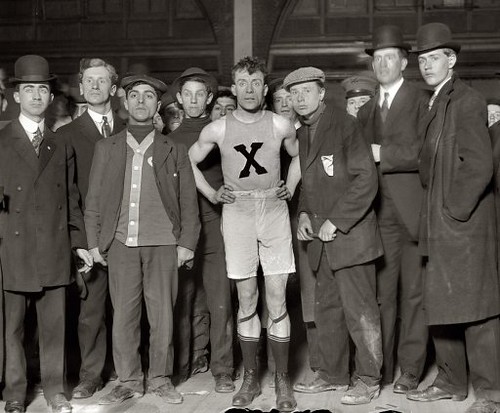
His body heaved at the pedals, like an automaton, on two wheels. He wasn't going fast but he was at least moving. I trotted alongside him and asked 'Who are you? What's going on? Where are the others?' Bent over his handlebars, his eyes riveted on the road, the man never turned his head nor uttered one sole word. He continued and disappeared round a turn. Steinès had read his number and consulted the riders' list. Steinès was dumfounded. 'The man is François Lafourcade, a nobody. He has caught and passed all the cracks' ... Another quarter-hour passed before the second rider appeared, whom we immediately recognized as Octave Lapize. Unlike Lafourcade, Lapize was walking, half leaning on, half pushing his machine. But unlike his predecessor, Lapize spoke, and in abundance. 'You are assassins, yes, assassins!' To discuss matters with a man in this condition would have been cruel and stupid.
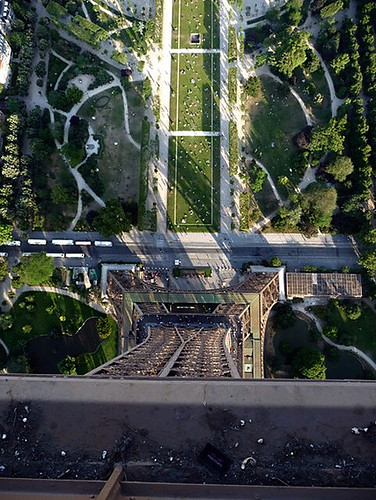
Breyer was the assistant organizer of the Tour de France; Steinès, the man who had proposed racing over the Pyrenees. The next year, not only did they return, they decided to include the fucking Alps. The hundredth anniversary of that second decision wrapped up Sunday on the Champs-Elysées. Fittingly, it was a race designed for climbers, featuring seven days in the mountains, with four hors-catégorie summit finishes (including the highest finish in race history atop the 8,678' Col du Galibier), and just a single, hilly individual time trial.5 For only the second time since 1967, the Tour began with a mass start instead of a prologue.6 Something to bear in mind: when two riders of equal talent race up a mountain, the one who can suffer more without his or her legs giving out will be the first to the summit. Barring a mechanical failure, it is exactly that simple.
4: And there's truth to that. Do you really believe that with a body as large, athletic, coordinated and durable as Shaquille O'Neill's, you couldn't make an NBA roster? A Turkish league one? One in Australia's NBL? Bet I could.The Tour is comprised of perhaps the 21 most high-profile bike races in the world; four individual jersey competitions, each contested by a different set of riders over the three weeks; an award for the most aggressive rider; and a team competition. To try to encompass the narrative density and sprawl that follows from all that in a single recap would be such an oversimplification as to be disingenuous: I could no more pull that off than play part of the Brandenburg Concertos on the harmonica. Over the next several days, there will be a series of posts giving the story of the Tour for a single rider. Hopefully, taken together, they will give some approximation of the spirit of the greatest single sporting event there is.
5: Since riders who finish in a group all receive the same time and since, with a constantly revolving set of fresh legs to break the air up front, a group can nearly always catch outliers given enough flat distance, the two main opportunities for riders to set some distance between themselves in the overall standings are in the climbs, where small differences in how fresh your legs are and how deep you're willing to dig can quickly balloon into hard-to-close gaps, and time trials, where everyone races against the clock and drafting isn't allowed. Those shots of riders in teardrop helmets and skinsuits that make them look like aliens? That's time trialing. But where climbing is typically ruled by whippets of men with gaudy power-to-weight ratios, the greater pure power output of a large rider will often translate into very quick time trials. Some, like Lance Armstrong and Alberto Contador, are very good at both; some, like the Schleck brothers or Fabian Cancellara, only one. It is not coincidence that, while all three stand 6'1", Spartacus is listed at a full 30 lbs heavier than the Schlecks.
6: A Prologue is a short individual time trial at the very start of a stage race. It provides a level of pageantry with its dramatic starting gate and individual aero jerseys for every standing national and world champion, as well as, for the Tour anyway, the defending race champion. It also provides a pecking order of sorts, as contenders get a chance to establish a time gap in the standings from the very start.
Labels:
Alps,
Corporation,
cycling,
Heroism,
Irreducible Complexity,
Pain,
The Color Yellow
Tuesday, December 21, 2010
Both Sides of the Coin
On Some Faraway Beach: Ryan Lochte's Quiet Dominance

Nobody but swimmers pays attention to swimming when the Summer Olympics aren’t happening. As with many Olympic sports, it’s compelling enough when it’s on NBC amid the din and pageantry and Costasification, but it slips easily off the radar when the volume gets turned back down. There’s no external history to the sport for us, no obvious route to fandom. Competitive swimmers are dedicated athletes who battle for glory, but they’re also pale people who live their lives swimming endless laps in artificially-lit pools and know more about chlorine's effects on hair and skin than you or I would care to think about.
We’ve more or less reached cultural sports saturation. The big three rule the airwaves and bandwidth, and hockey, NASCAR and MMA all vie to join the club. Soccer is the wild card, combining massive global success with stop-and-start domestic attention. Anything else is a niche interest. Michael Phelps is a star, but in the Lance Armstrong way where he transcends the limitations of his sport’s appeal. He's context-free, famous for being a winner, not a swimmer.
I’m totally fine with that. As a dedicated sidestroke man, competitive swimming was never my game and I therefore wouldn’t know how to follow it if I wanted to. I imagine, however, that the sport’s grappling with technological advances in swimsuits is fascinating if you have all of the facts. Remember that during the Olympics there was a lot of hullabaloo about swimsuit technology, nearly as much as there was about swimmers. New advances in computer design and materials let Speedo et al. make a suit that slipped through the water and forced the swimmer’s body into ideal hydrodynamic position while giving muscles compression. Just like when speed skating saw the clap skate’s introduction, the record books were rewritten over the course of a year or two. The marks of old champions fell not just to superior talent and modern conditioning1 but also to a technological advantage modern swimmers enjoyed. A lesser swimmer could post a better time than, say, 1990’s best breaststroker2 purely because of what he or she was wearing.
Unlike speed skating, the powers that be in swimming decided this was a bad thing. They were smart enough not to tamper with the record books and disallow the new records, but high-tech bodysuits were illegal in races starting this year. Predictably, the onslaught of new swimming world records stopped pretty much overnight.
Except for Ryan Lochte. Lochte, whom you may remember as the Scottie Pippen to Michael Phelps’s Jordan in the 2008 Olympics, or maybe Drysdale to his Koufax, has apparently been on a tear. He has set two world records this year, both in individual medleys. This wouldn’t be noteworthy were it not for the fact that no other swimmer has broken a single one.
The swimsuit era is apparently competitive swimming’s version of baseball’s Steroid Era, when world records fell left and right because of an unnatural competitive advantage over history. Credit the sport’s organizers with deciding to put a stop to it all, rather than sit back and enjoy records falling as engineers built faster suits, an Enlightenment ideal of sporting progress.3 Lochte isn’t getting much press about the accomplishment, probably in part because of media desensitization to broken world records. Still, if he keeps performing at this level he should be able to win enough gold medals to have NBC produce soft-focus human interest clips and get his face plastered on all the Wheaties boxes he could want. In the meantime, we’d do well to take a second and appreciate someone not just beating his competitors but also overcoming a systematic handicap to set world records. He swam those two individual medleys faster than anyone else ever, including previous record-holders who enjoyed a virtual head start. If swimming were on Sportscenter, he would be LeBron James or Michael Vick. That's not going to happen, but he deserves more than nothing.
You Don't Miss Your Water 'Til Your Well Runs Dry: Floyd Landis Bottoms Out

I doubt you noticed, because it’s depressing and not that meaningful by itself, but it came out a few days ago that Floyd Landis wore a wire for federal agents last spring to help gather evidence against Michael Ball, who ran a low-level pro team. Landis, whom we last heard making pointed accusations4 about Lance Armstrong/US Postal Service Team doping, seems to be doing everything he can to destroy anyone he can in cycling. If you’re virulently anti-doping, maybe that makes him a hero for doing the ugly right thing. If you stake out any other position, he’s a flawed man striking those he can to get even. Maybe he’s trying to prove a larger point, but if so any message he’s trying to convey is lost in the mess of it all.
His is no righteous cause. If you believe the urine tests, he won the Tour de France by doping and was rightfully stripped of the illegally-gained title. If you believe his statements, he’s innocent of those charges but guilty of systematically doping throughout his career. He’s hardly the lone doper in cycling, but that doesn’t excuse anything. Even if this Michael Ball wire business is part of a Justice Department attempt to entangle former USPS riders into a case they can then roll up the food chain to Lance, it’s also biting the hand of a man who tried hard to get Floyd a job when almost no one else was interested in his comeback. That’s pretty cold, especially for a guy who needs all the friends he can find.
And yet I find myself feeling for the guy. I’m not trying to excuse him, necessarily. I don’t know enough about what he’s doing or why he’s doing it to really construct an informed opinion about where to place him on my personal good guy/bad guy spectrum. Either way, it’s pretty hard to imagine things going worse for a pro athlete who is still healthy (in a non-professional sense) and didn’t murder anyone.
His high-water mark was winning the 2006 Tour de France, a victory born of one of the greatest one-day rides pro cycling has ever seen. After performing so badly in the race’s 16th stage that he was written off as a contender, he responded by destroying the field in the 17th, beating the second-place finisher by nearly six minutes, a margin rarely seen in the pros. It looked like he had picked up the mantle of Great American Cyclist that Armstrong had abdicated, third in a line that started with Greg LeMond. If he could build on that victory, he could grow the sport further in the States while basking in adulation and endorsement dollars. But then it all went wrong.
The specifics are up for debate, but no one now claims he didn’t dope. Cycling is a sport rife with doping, so to be stripped of a Tour victory for it has to feel somewhat unfair to the caught rider. If half the peloton is doing it, getting singled out can’t seem fair, even if the punishment is the law. If he’s right about Armstrong’s doping history, it must be galling to have served as lieutenant for a serial offender who walked off a legend and then to go down in flames for the same crime. Examples must be made if the sport is going to get cleaned up5 but you can't fault the examples will feel singled out if doping is as pervasive as some claim. Add to that the possibility that he got caught for a drug he might not have taken and things get even murkier.
But fine, he doped and got caught for doping. That’s the system working. Others getting off scot-free doesn't excuse the crimes of those caught. Trumpeting his innocence, he raised around one million dollars from fans to fund his court defense, but he lost, was suspended for two year, and his legal bill was at least twice what he raised. He won the Tour, but that blew up in his face before he had the chance to cash in on the victory. Financially, he’s ruined.
His honesty, if that’s what it is, in admitting his own doping while fingering Lance bolsters his credibility as an accuser, but it also lays bare the duplicity of soliciting money from fans to clear his name. Whatever loyalists remained after years of court motions and underwhelming comeback were surely jettisoned then. Any sympathy he earned when he was running those Ride With Floyd events was gone in a flash of hypocrisy. “They all did it too!” is a way shittier justification than “I’m innocent!”
His career is over. Since his suspension ended Landis has been an unremarkable domestic racer. His sole international race was the 2009 New Zealand Tour of Southland, where he finished 17th of 95 racers in a race that has only ever been won by Kiwis, Aussies, and a lone unheralded American—hardly a springboard back into European racing. He last competed in the Cascade Cycling Classic in Oregon without a team, so it’s fair to say he’s done as a professional cyclist. Given how thoroughly he’s burned his bridges in the sport, I don’t see how he could forge a career in management, media or with a company in the industry.
The personal picture seems no better. In 2006, his close friend, ex-roommate, and father-in-law committed suicide, something Landis has admitted is almost certainly related to his doping conviction. His wife left him in 2009. He has never had a close relationship with the Mennonite parents who disapproved of his cycling when it was just a childhood hobby. It’s hard to imagine he has any strong roots after living the nomadic life of a peloton rider. He’s working with/for the Feds these days but there’s no future in that once Lance Armstrong is either caught or slips their snare.6 After that, what does he have left? Cycling is done with him, whether or not he’s done with it. He has no background in anything else or education beyond high school. I don’t know anything specific about his finances, but there’s no way he’s rich after his legal battles (and maybe divorce settlement). His family has fallen apart. He is the shell of what he was, defined by the career that was ripped from him. He hasn’t really been a pro cyclist for five years, but he’s a 35-year-old with no other obvious options. He's a man who has outlived his self-definition, and there's nothing sadder in sports. I'm not saying he didn't get what he deserves, but I can't help but feel sorry for him.
“I love him who desires the impossible.”
—Goethe, Faust
Nobody but swimmers pays attention to swimming when the Summer Olympics aren’t happening. As with many Olympic sports, it’s compelling enough when it’s on NBC amid the din and pageantry and Costasification, but it slips easily off the radar when the volume gets turned back down. There’s no external history to the sport for us, no obvious route to fandom. Competitive swimmers are dedicated athletes who battle for glory, but they’re also pale people who live their lives swimming endless laps in artificially-lit pools and know more about chlorine's effects on hair and skin than you or I would care to think about.
We’ve more or less reached cultural sports saturation. The big three rule the airwaves and bandwidth, and hockey, NASCAR and MMA all vie to join the club. Soccer is the wild card, combining massive global success with stop-and-start domestic attention. Anything else is a niche interest. Michael Phelps is a star, but in the Lance Armstrong way where he transcends the limitations of his sport’s appeal. He's context-free, famous for being a winner, not a swimmer.
I’m totally fine with that. As a dedicated sidestroke man, competitive swimming was never my game and I therefore wouldn’t know how to follow it if I wanted to. I imagine, however, that the sport’s grappling with technological advances in swimsuits is fascinating if you have all of the facts. Remember that during the Olympics there was a lot of hullabaloo about swimsuit technology, nearly as much as there was about swimmers. New advances in computer design and materials let Speedo et al. make a suit that slipped through the water and forced the swimmer’s body into ideal hydrodynamic position while giving muscles compression. Just like when speed skating saw the clap skate’s introduction, the record books were rewritten over the course of a year or two. The marks of old champions fell not just to superior talent and modern conditioning1 but also to a technological advantage modern swimmers enjoyed. A lesser swimmer could post a better time than, say, 1990’s best breaststroker2 purely because of what he or she was wearing.
1: And, if we're being honest, modern drugs in some instances.
2: I will never be mature enough to not snicker at some things...
Unlike speed skating, the powers that be in swimming decided this was a bad thing. They were smart enough not to tamper with the record books and disallow the new records, but high-tech bodysuits were illegal in races starting this year. Predictably, the onslaught of new swimming world records stopped pretty much overnight.
Except for Ryan Lochte. Lochte, whom you may remember as the Scottie Pippen to Michael Phelps’s Jordan in the 2008 Olympics, or maybe Drysdale to his Koufax, has apparently been on a tear. He has set two world records this year, both in individual medleys. This wouldn’t be noteworthy were it not for the fact that no other swimmer has broken a single one.
The swimsuit era is apparently competitive swimming’s version of baseball’s Steroid Era, when world records fell left and right because of an unnatural competitive advantage over history. Credit the sport’s organizers with deciding to put a stop to it all, rather than sit back and enjoy records falling as engineers built faster suits, an Enlightenment ideal of sporting progress.3 Lochte isn’t getting much press about the accomplishment, probably in part because of media desensitization to broken world records. Still, if he keeps performing at this level he should be able to win enough gold medals to have NBC produce soft-focus human interest clips and get his face plastered on all the Wheaties boxes he could want. In the meantime, we’d do well to take a second and appreciate someone not just beating his competitors but also overcoming a systematic handicap to set world records. He swam those two individual medleys faster than anyone else ever, including previous record-holders who enjoyed a virtual head start. If swimming were on Sportscenter, he would be LeBron James or Michael Vick. That's not going to happen, but he deserves more than nothing.
3: There will of course still be a swimsuit technology arms race, but within set limits, much like UCI regulation of bicycles.
You Don't Miss Your Water 'Til Your Well Runs Dry: Floyd Landis Bottoms Out
“What is left is the other side of the Faustian bargain: To live all one’s days never able to recapture the feeling of those few years of intensified youth. In a way it is the fate of a warrior class to receive rewards, plaudits, and exhilaration simultaneously with the means of self-destruction.”
– Bill Bradley, Life on the Run
I doubt you noticed, because it’s depressing and not that meaningful by itself, but it came out a few days ago that Floyd Landis wore a wire for federal agents last spring to help gather evidence against Michael Ball, who ran a low-level pro team. Landis, whom we last heard making pointed accusations4 about Lance Armstrong/US Postal Service Team doping, seems to be doing everything he can to destroy anyone he can in cycling. If you’re virulently anti-doping, maybe that makes him a hero for doing the ugly right thing. If you stake out any other position, he’s a flawed man striking those he can to get even. Maybe he’s trying to prove a larger point, but if so any message he’s trying to convey is lost in the mess of it all.
4: Accusations which, it should be said, are equally plausible and unproven.
His is no righteous cause. If you believe the urine tests, he won the Tour de France by doping and was rightfully stripped of the illegally-gained title. If you believe his statements, he’s innocent of those charges but guilty of systematically doping throughout his career. He’s hardly the lone doper in cycling, but that doesn’t excuse anything. Even if this Michael Ball wire business is part of a Justice Department attempt to entangle former USPS riders into a case they can then roll up the food chain to Lance, it’s also biting the hand of a man who tried hard to get Floyd a job when almost no one else was interested in his comeback. That’s pretty cold, especially for a guy who needs all the friends he can find.
And yet I find myself feeling for the guy. I’m not trying to excuse him, necessarily. I don’t know enough about what he’s doing or why he’s doing it to really construct an informed opinion about where to place him on my personal good guy/bad guy spectrum. Either way, it’s pretty hard to imagine things going worse for a pro athlete who is still healthy (in a non-professional sense) and didn’t murder anyone.
His high-water mark was winning the 2006 Tour de France, a victory born of one of the greatest one-day rides pro cycling has ever seen. After performing so badly in the race’s 16th stage that he was written off as a contender, he responded by destroying the field in the 17th, beating the second-place finisher by nearly six minutes, a margin rarely seen in the pros. It looked like he had picked up the mantle of Great American Cyclist that Armstrong had abdicated, third in a line that started with Greg LeMond. If he could build on that victory, he could grow the sport further in the States while basking in adulation and endorsement dollars. But then it all went wrong.
The specifics are up for debate, but no one now claims he didn’t dope. Cycling is a sport rife with doping, so to be stripped of a Tour victory for it has to feel somewhat unfair to the caught rider. If half the peloton is doing it, getting singled out can’t seem fair, even if the punishment is the law. If he’s right about Armstrong’s doping history, it must be galling to have served as lieutenant for a serial offender who walked off a legend and then to go down in flames for the same crime. Examples must be made if the sport is going to get cleaned up5 but you can't fault the examples will feel singled out if doping is as pervasive as some claim. Add to that the possibility that he got caught for a drug he might not have taken and things get even murkier.
5: Whatever that means.
But fine, he doped and got caught for doping. That’s the system working. Others getting off scot-free doesn't excuse the crimes of those caught. Trumpeting his innocence, he raised around one million dollars from fans to fund his court defense, but he lost, was suspended for two year, and his legal bill was at least twice what he raised. He won the Tour, but that blew up in his face before he had the chance to cash in on the victory. Financially, he’s ruined.
His honesty, if that’s what it is, in admitting his own doping while fingering Lance bolsters his credibility as an accuser, but it also lays bare the duplicity of soliciting money from fans to clear his name. Whatever loyalists remained after years of court motions and underwhelming comeback were surely jettisoned then. Any sympathy he earned when he was running those Ride With Floyd events was gone in a flash of hypocrisy. “They all did it too!” is a way shittier justification than “I’m innocent!”
His career is over. Since his suspension ended Landis has been an unremarkable domestic racer. His sole international race was the 2009 New Zealand Tour of Southland, where he finished 17th of 95 racers in a race that has only ever been won by Kiwis, Aussies, and a lone unheralded American—hardly a springboard back into European racing. He last competed in the Cascade Cycling Classic in Oregon without a team, so it’s fair to say he’s done as a professional cyclist. Given how thoroughly he’s burned his bridges in the sport, I don’t see how he could forge a career in management, media or with a company in the industry.
The personal picture seems no better. In 2006, his close friend, ex-roommate, and father-in-law committed suicide, something Landis has admitted is almost certainly related to his doping conviction. His wife left him in 2009. He has never had a close relationship with the Mennonite parents who disapproved of his cycling when it was just a childhood hobby. It’s hard to imagine he has any strong roots after living the nomadic life of a peloton rider. He’s working with/for the Feds these days but there’s no future in that once Lance Armstrong is either caught or slips their snare.6 After that, what does he have left? Cycling is done with him, whether or not he’s done with it. He has no background in anything else or education beyond high school. I don’t know anything specific about his finances, but there’s no way he’s rich after his legal battles (and maybe divorce settlement). His family has fallen apart. He is the shell of what he was, defined by the career that was ripped from him. He hasn’t really been a pro cyclist for five years, but he’s a 35-year-old with no other obvious options. He's a man who has outlived his self-definition, and there's nothing sadder in sports. I'm not saying he didn't get what he deserves, but I can't help but feel sorry for him.
6: If the feds couldn't get Barry Bonds for his ties to an organization as flagrant as BALCO, I have my doubts about their ability to nail Armstrong. He's well-connected and powerful in his sport, the American public loves him as a champion and cancer crusader and if he did dope, it surely happened largely in Europe, at least on an organizational level.
Sunday, November 21, 2010
The Contador Uncertainty Principle
“The significance of this mass ceremony…is paradoxical. It is preformed in silent privacy, in the lair of the skull. Yet each communicant is well aware that the ceremony he performs is being replicated simultaneously by thousands (or millions) of others of whose existence he is confident, yet of whose identity he has not the slightest notion.” – Benedict Anderson, Imagined Communities
The problem with Alberto Contador isn’t that he’s a doper who got caught red-handed. The problem with Alberto Contador isn’t that he, cycling’s reigning champ, got blown up by a false positive, either. The problem is that he’s a mystery we’ll probably never have the facts to solve, and that he’s more harbinger than aberration. Maybe he did it, maybe he didn’t, but the whole culture has to move forward without any sort of closure. It looks like he’ll face some punishment from the UCI, he may follow through on his threat to retire, but, barring a revelation as shocking as it is unexpected, opinions will have to be formed without proof.
Here are the facts: Contador has been largely unstoppable in the grand tours since Lance Armstrong retired. He won the Tour de France in 2007, 2009 and 2010, and didn’t in 2006 and 2008 because he didn’t take part. He made up for his tour absence in 2008 by winning both the Giro d’Italia and the Vuelta a España. His teams weren’t included in the 2006 and 2008 tours because of doping investigations, but he was never individually implicated. Word came out this fall that he failed a doping control on the final rest day in the 2010 TdF, testing positive for clenbuterol, a drug that builds lean muscle. Then we learned that a urine sample from the day before that rest day tested positive for plasticizers, indicating an illegal blood transfusion or infusion.
Contador’s team claims he ate some contaminated meat gifted to him by Spanish friends during that rest day. This incensed the Spanish meat industry, which swore it was clean, and experts ruled that explanation both plausible and somewhat unlikely. (The store from whence the meat came has now been tested and shown no hint of clenbuterol, for whatever that's worth.) The plasticizer test has not been validated for anti-doping use, a fact that doesn’t impugn its accuracy but does allow anyone so inclined to cast aspersions. Complicating everything, clebuterol is sometimes present in livestock and plasticizers are environmentally present in modern life. (Remember the BPA/water bottle kerfuffle?) I’m no doctor/biochemist, but my impression is that the charges here are pretty damning, but not quite open-and-shut. Making any judgment of guilt or innocence depends at least partially on your reading of Contador’s character, motives and veracity, not simply the facts.
But, of course, the UCI can’t just let this hang over the sport like a chemical sword of Damocles. It has instructed the Spanish Federation to open hearings. What exactly will happen isn’t clear, but it’s instructive to note that a rider by the name of Fuyu Li tested positive for clebuterol last spring, and it looks like he’ll be banned for two years for his transgression. It’s one thing to offer up plausible excuses, but UCI’s doping regulations don’t care about intent. The important thing here isn’t how the clenbuterol got there, but that it was present. Contador has threatened to retire if a ban is handed down, but it’s not clear how that could be avoided if he can’t work up a little more concrete defense.
The point for me isn’t that cycling has another doping black eye. That’s pretty clear-cut. No matter how this plays out, it’s another headline where a top name is tied to drugs. The connection is always going to be louder than the details. The point is that we’ve reached the synthesis of the dialectic of doping. Unless someone does something truly stupid1, black and white are gone forever from our drugs in sports discourse. Gone are the days when our stars were demigods, protected by their press to fit into neat (and contrived) narrative arcs, but gone also are the days when doping first barged into our collective consciousness and users were exposed simply because the authorities were now looking. In the modern cat-and-mouse arms race of doping, rumors and hints have become damning because hard facts are nearly impossible to come by.
1: People will of course do stupid things, sure as the sun rises, but the bigger the player, the more money will be spent to make the crimes smart.As I’ve said before, I am spectacularly uninterested in vilifying individual dopers. Don’t misunderstand, I think in many ways we’re underestimating how pervasive PEDs are in sports, but I can’t get my hackles up when an athlete makes a decision that I consider regrettable but totally human. This is a problem that needs to be attacked at a sport-wide level. I’m glad that the UCI is taking doping seriously. I know that randomized doping controls are an intrusive fact of life in the peloton, but I’ll take that over unchecked cheating. But I’m not so naïve as to think that testing eliminates doping, either, or catches all dopers. It shifts it from something that is talked about in some corners of locker rooms to a furtive secret between a private trainer and athlete. If even a system as comprehensive as the UCI’s biological passport, which establishes baselines for all sorts of things I don't understand in each individual athlete and checks their tests not just for abnormal levels relative to human norms but also to all of their prior levels, can be circumvented or flawed, then there is no fail-safe test.
Which leaves those of us who are spectators, fans and media both, watching the sport with a kind of jaundiced ignorance. American fans have already seen this play out with Tyler Hamilton’s vanishing twin argument and Floyd Landis’s fan-funded defense. Anyone could be doping, because getting to the top of the heap is always going to be worth more for some athletes than moral rectitude or respecting the threat of banishment. Various figures make statements about how getting tough on doping has cleaned the sport up, but there’s no real way to evaluate the truth of such claims. How much of the peloton is doping? How much of the peloton used to be doping? If the riders don’t know, and beyond their own bodies and maybe those of their closest confidants, they don’t, how exactly are we supposed to judge at all?2
2: This is why I could never take Jose Canseco's claims about X percent of major leaguers using steroids seriously. He never gave me reason to think that he was smart enough to look beyond his own confirmation biases. (Given that he's bankrupt and tweeting about his lost chandeliers and young, hot girlfriend, he hasn't exactly forced me to reevaluate my position since.)
So what to do about this onlooker limbo? If one is properly disgusted, swearing off the sport is an option, but it’s not like it’s an isolated phenomenon. Baseball has doping, football does too, though no one cares3, I assume it’s something that goes on in hockey, and you’re just playing naïve if you think that soccer and basketball, two sports that prize athleticism and stamina, don’t have at least small portions of their players on drugs too. The edges given by chemistry are too real to ignore, and the financial rewards for success are too big for many to turn down. As long as sports are played by competitive people who are payed to succeed, athletes will dope. Sadly, it’s that simple. And in a modern world of computer-aided chemistry, there will always be a new drug that the tests don’t know about yet, but are trying to find. I’m not trying to be a downer here, but I don’t see any way that isn’t true.
3: Joe Posnanski has said that he thinks the public doesn't care about steroids in football because there's no statistic like home runs to fixate on. I think it's more that baseball is a game of individual numbers that tie the modern game seamlessly to its past, while football is a game of teams filled with masked, numbered men following coaches' orders. Player performance is too context-dependent to compare outside the player's era. The only numbers that matter are wins and losses, and the game has changed too much too quickly to ground it historically. Jimmy Foxx would still be a pretty good first baseman, it seems clear, but what would Bronco Nagurski do in the NFL today? No one could begin to guess.Several decades (or centuries, depending on how you keep score) into the acceleration of modern communication and hence media, we’ve already endured the slow erosion of the athletes-as-role-model archetype. Penis photos make the rounds on Deadspin for those who care, and the rest of us just try to ignore it. Think of the trouble Joe Namath would have gotten into off of the field these days. Doping is the worst crime an athlete can commit against his or her sport and against our trust, but more and more we’ll have to weigh individual guilt of that crime through the lens of our opinion of the individual.
The aesthetic perfection of some sporting moments and the arbitrary nature of victory in sports often lends itself to our imbuing of sports with a false, or at least overblown, morality. Fair play transcends not breaking the rules to be a mindset and a worldview. I’m not saying that there is no value in that; parents should still tell their kids to play the game the right way. But ever since radio and then television got into pro sports and players started making real money, the love of the game for them is ancillary to the economic benefits of success. The two can compliment each other, but to expect a pro to put aside success and money to play the game “the right way” when they don't is foolish. We’ve come to terms with athletes being people, warts and all, though specific failures still disappoint us. We need to stop thinking about doping as a moral absolute and shift it into that category too, of being just one more piece of information about a person.
It’s one thing when David Millar gets caught with EPO or Ben Johnson tests positive for steroids. But those days are gone. What are we to do with Alberto Contador or the next MLB player to fail a test based what he claims is a “unauthorized ingredient in a supplement”? At least some of the time, isn’t that guy going to be telling the truth? I think it’s correct that punishment depends solely on a banned substance’s presence in a test, but we as fans and media need to come to a place where, when definitive proof can’t be found, we can figure out what to do with a professional’s reputation. If the game is now run in such a way where some significant portion of the dopers won’t get caught4, how is it fair to pillory those that do, especially if occasional false positives are inevitable? Hand down stiff punishments, let those who can prove innocence/guilt do so, but in the court of public opinion, let’s stop treating doping like a witchhunt and deal with the facts as they are, not as we wish they were.
4: There's a non-zero chance that Lance Armstrong, America's golden god of cycling and post-cancer heroism, doped throughout his run of dominance. He didn't get caught, so we all have to go with our gut feelings on that one, and on a lot of his rivals.
Labels:
Contador,
Contingency,
cycling,
dialectics,
doping,
evolutionary arms race,
fandom,
indeterminacy,
morality,
naivete,
perception,
sin,
theodicy
Subscribe to:
Posts (Atom)