Showing posts with label The Invisible Handjob of the Market. Show all posts
Showing posts with label The Invisible Handjob of the Market. Show all posts
Friday, September 9, 2011
The Snowfall
The classic landscapes of dreams are not
More pathless, though footprints leading nowhere
Would seem to prove that a people once
Survived for a little even here.
Fragments of a pathetic culture
Remain, the lost mittens of children,
And a single, bright, detasseled snow cap,
Evidence of some frantic migration.
The landmarks are gone. Nevertheless,
There is something familiar about this country.
Slowly now we begin to recall
The terrible whispers of our elders
Falling softly about our ears
In childhood, never believed till now.
-Donald Justice

Tuesday, November 23, 2010
Duty Calls
"Broad paths are open to every endeavour, and a sympathetic recognition is assured to every one who consecrates his art to the divine services of a conviction of a consciousness."
– Franz Lizst1
1: I get why people are upset about the Call of Duty Ad, but a)it's a clever, effective advertisement and b)I have no patience for "more patriotic than thou" arguments about video game ads. That's my definition of missing the forest for the trees. I care more that Kobe has such good, sly taste in non-shoe endorsements. Dude geeks out about what he likes, and I can get behind that. (If Enter the Dragon gets made today, it's Kobe fighting Bruce Lee, isn't?2)
2: Martial arts Kobe is a far more terrifying proposition than kung fu Kareem, right? Also, if Bruce Lee were around today it would be Bruce Li, wouldn't it? But nesting footnotes is ridiculous, so I'll stop there.
Wednesday, January 20, 2010
Draw Up a Morality Play on the Clipboard
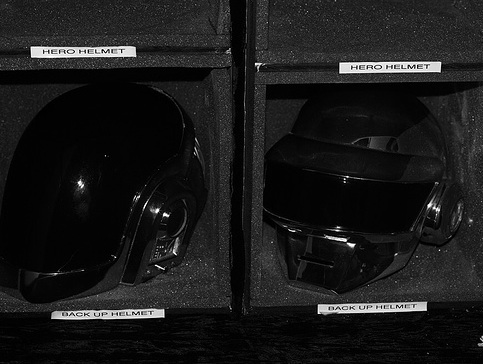
“A work of art is useless as a flower is useless. A flower blossoms for its own joy. We gain a moment of joy by looking at it. That is all that is to be said about our relations to flowers. Of course man may sell the flower, and so make it useful to him, but this has nothing to do with the flower. It is not part of its essence. It is accidental. It is a misuse.” – Oscar Wilde
Sport is an arena populated by human beings. Human beings are, by nature, given to success and failure, kindness and pettiness, acts of grace and acts of violence. Their actions result from the best of intentions, the worst and every shade of grey in between. This is, of course, true both on and off the field of play. None of that is news; we all know it, and yet so much of the conversation about sports seems to be dedicated to ignoring that fact. Moral outrage is the currency for transgression; the dialogue demands its pound of flesh from anyone “caught” at anything it is publicly decided they shouldn’t have been doing.
The problem, it seems to me, stems from our inability to reconcile the human actors in sports with the transcendence our following of said sports sometimes provides us, what Oil Can called applied aesthetic immanence. Moments of perfection, both big and small, get under our skin. A pitcher setting a batter up and then striking him out with a perfect changeup. Your favorite team winning the championship. A guard breaking his defender’s ankles. A breakaway holding off the peloton to win the day. We all have self-constructed buttons our fandom positions us to occasionally have pushed.1 The moments when you jump out of your seat, unable to keep from shouting and the quiet instants of knowing are what keep us coming back, keep us hooked to the games/matches/races. There is a purity at the core of this feeling, an unalloyed joy seldom allowed us anywhere else in life. Inside the moment(s) of immanence, context and contingency are swept away, unimportant, as we soak in all that we can.
1: The rarer it is that any given button gets pushed, the more import it gets. A thunderous dunk jolts you; a championship moves you. Cf. the graph in this post.
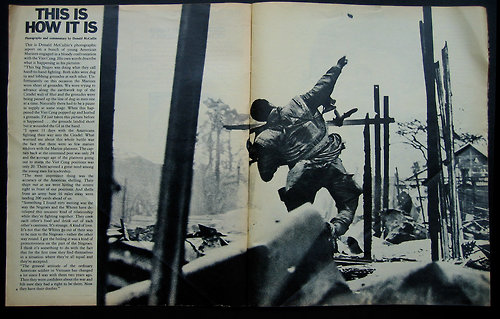
It is a betrayal of this feeling when we are reminded that the purity of an action is no guarantor of the purity of the actor. Even though the private lives and decisions of the moving parts in the setpieces of our transcendence are not our business and wholly unrelated to why and how we know them, we can’t help but care. Every morsel we learn about them informs a facet of their picture, making us feel like we have a more perfect knowledge of them and their game; when what we learn doesn’t square with the perfection of the moments we hold closest it’s easy to hold that against the athlete. If a player drives drunk or assaults someone, it has absolutely nothing to do with his game and skill on the court. There is no direct connection, but most of us nonetheless can’t shake the emotional connection we’ve constructed.
With our wall-to-wall media coverage of the famous, gotcha press tenor and the lifestyle afforded our stars by the money we indirectly pay them, the trap is continually set. Athletes will keep getting caught sleeping around on their wives, driving drunk, making poor decisions with firearms and violence and doing all of the petty, shortsighted and small things that humans as a data set will do. The same is true of any other profession, be it teachers/executives/postmen/etc, especially the rich. Any failings pros might have are compounded by a living in a bubble where every wheel is greased by money and/or fame. As Tiger Woods recently demonstrated so pyrotechnically, everything is for the taking at the top, right up until the instant it blows up in your face, be it because you went a step too far, made a stupid choice or just got unlucky. But for every guy whose cover gets blown, there are countless more who count their blessings it wasn’t their spot that got blown up.
Constructing an Echo Chamber
“In ‘punishing’ the debtor, the creditor participates in a right of the masters: at last he, too, may experience for once the exalted sensation of being allowed to despise and mistreat someone as ‘beneath him’—or at least, if the actual power and administration of punishment has already passed to the ‘authorities,’ to see him despised and mistreated. The compensation, consists in a warrant for and title to cruelty.” – Friedrich Nietzsche, The Genealogy of Morals
The sports media is responsible for public outrage. Everybody calibrates his or her own personal response, but we don’t get the luxury of doing it in a vacuum. When you read on the ESPN info scroll that someone is in trouble for something, you get to decide, consciously or not, whether that sets off any of your personal alarms. But to even get to that point, the story has already made it through the filter as newsworthy. If something happens and doesn’t get picked up, we don’t have a chance to get worked up about it. It’s the tree falling in the forest.
Once a story gets reported, it can vanish the next day or it can get shouted about for weeks. The gravity of the offense is certainly one of the factors here, but hardly the only one. Does it seem juicy? How famous is the player? What kind of relationship does the culprit have with the media?2 How does the transgression square up with the star’s public persona? What race is he?
2: Barry Bonds is by nearly all reports a world-class ass and would have people on his case no matter what, but don’t you think he would have gotten a bit more slack if he’d been a little friendlier in the locker room throughout his career? Contrast him to Tony La Russa, who was caught dead drunk and asleep in his car at an intersection, but who got off with a misdemeanor and an apology and whose story vanished from the news cycle. (Barry's trouble, of course, also stemmed from being an angry black man, not just one unfriendly to the media, and it sure didn't hurt Tony that he was a middle-aged white dude...)
The point is that the public reacts to what they’re told, how often they’re told it and how loudly it’s told. The sporting media is not even close to impartial, but its biases don’t seem to get taken into account when they tell us to get mad about something. We don’t seem to have any critical distance from the feedback loop of noise and outrage.
Now think about team and league responses. Players get fined/suspended and pr statements are put out variously supporting and damning players. Sometimes we’re asked to respect a man/family’s privacy in a time of personal trouble, sometimes the culprit is thrown under a bus. It would be nice if the calculus were that of guilt, severity and mitigating factors, but the truth is that the only calculations are money and public relations (also known as future money). The more a player is worth, the more everyone has their back. The more they’re a burden, the faster they get thrown to the wolves. If they’re unimportant, they either are made an example of or get no words at all. Why do you think Arenas is suspended right now for finger guns and Javaris Crittenton isn’t for chambering a round?
Signal and Noise

I have no outrage in me for the private failings of sports stars. If they break the law, I want them to face whatever punishment our legal system decrees fitting. If they break a league rule, I want them to be penalized as appropriate.3 Beyond that, I don’t care. Outrage is in vogue culturally at the moment, and this is no less true in sports than elsewhere. ESPN plays to this because people pay attention. Any time a player gets targeted for anything less than a monstrous act, though, I just end up feeling sorry for the player. Sure, Mark McGwire used steroids, and I’m all for rigorous testing, but so did 20-50% of baseball (roughly), so how is it fair to hold it against only him? Clean up the system, but don’t arbitrarily crucify anyone. All right, Tiger Woods slept around on his wife, but that’s not illegal, it’s just sleazy, and how is it our business? Gilbert Arenas is going to have to deal with his guilty plea; I don’t see how punishment beyond that is fair or should be up to us.
3: This is only really true as relates to competitive fairness. I wish players weren’t muzzled by the threat of fines when talking to the media. It would be a far more interesting sports world if players could always speak their minds.
The bottom line, for me, is this: I want my sports stars to play sports. What they do with their lives beyond that simply isn’t my business. If they do something with repercussions in sports, either because it physically gets in the way of them playing or because legal ramifications impede their career, that’s germane to my fandom and I’ll pay attention. But outside of that narrow window, I’d prefer to respect their privacy rather than play the morality police. It’s just not my damn business.
Wednesday, January 13, 2010
The Other End of the Telescope
I didn't really want to write about the hurly-burly in the Wizards' locker room1. There have already been more than enough words written (in this very blog, even), and if you follow basketball, you likely have an opinion already. But I had been planning to write a post about justice in professional sports, and this is in many ways an ideal test case. Besides, it's topical, so long as you're not counting in blog years.
Foucault (from, again, The Punitive Society) identifies "In the penal system of the Classical period, ...mixed together, four great forms of punitive tactics-- four forms having different historical origins, each having played if not an exclusive role then a privileged one:
1. exile, cast out, banish, expel beyond the borders, forbid certain places, destroy the home, obliterate the birthplace, confiscate the possessions and properties;
2. arrange a compensation, impose a redemption, convert the damage caused into a debt to repay, turn the offense into a financial obligation;
3. expose, mark, wound, amputate, make a scar, stamp a sign on the face or the shoulder, impose an artificial and visible handicap, torture-- in short, seize hold of the body and inscribe upon it the marks of power;
4. confine."
Now, sports leagues exist within a wider social and governmental milieu, which limits both the mechanisms and the scope of their oversight. No matter how badly you screw up, it is strenglich verboten for the civilian employer to brand, torture, or incarcerate you. But the first two punitive tactics have pretty straightforward manifestations in suspensions and fines, respectively2.
Modern penal systems of any sort "define the notion of crime, the role of the public party and the necessity of punishment... on the basis of the interest of society or the need to protect it."3 Now, I'm not aware of any not-for-profit professional sports. The working analogue for "the interest of society" is economic viability, which relies on a committed fanbase to prop up television, merchandizing, and ticket revenues. Most penal action is the low-stakes and relatively apolitical maintenance of the rules of the sport. Criticizing referees, disorderly conduct, scuffing baseballs, so on. A sport is defined by its framework of rules, and in the name of competition, sometimes people color outside the lines. But looking at what each sport goes out of its way to penalize is a great way to tell what it sees as the biggest threats to that, and often what ideals it means to hold sacred4, 5.
So. Guns in a District locker room. That this blog might sound like an intact record, I won't be unpacking the racialized nature of the coverage. The important things here are: there was sensational coverage of an incident involving rich black men with guns; the NBA is terribly threatened by threatened white people. And so the Association is going to some lengths to protect itself. What I find interesting is how explicitly the political concerns trump the juridical ones. Gilbert may have been the instigator, but it was Crittenton who actually chambered a round in the locker room. His was a far more serious transgression of the norms of safety, law, and judgement every press statement is busy citing. And yet Arenas was the only one suspended, and then only after an embarrassing picture.
Arenas is well-known, though. As one of the faces of the NBA, he carries greater name recognition, and thus has greater ability to reflect poorly on the NBA. And as it happens, that is enough for the NBA rules. TrueHoop's Chris Sheridan reports:
Anything David Stern deems "prejudicial or detrimental to the best interests of basketball or the Association" is no less punishable than immorality, foul play, and criminal malfeasance. And so, by its own rules, while the finger guns were a physically, morally, and competitively harmless jest, they exacerbated a PR incident that played into stereotypes that are prejudicial to the Association6 and were penalized accordingly. Because Javaris Crittenton is not famous, he has not been the same embarrassment to the Association, and will not be unless he is found guilty of some seriously criminal behavior. But as reported by the Post, that seems unlikely:
But there's more to it than that. Henry Abbott, in a post well worth reading in its entirety, points out that "when you fall from grace in the NBA, you don't just fall into mediocrity. You fall into the place where the NBA must use you to define, to fans, what it is not." But, for all the intent to distance itself from the incident, pillorying Arenas "reinforces the racially-tinged notion that the NBA does have a cultural problem, instead of a few bad actors or bad moments."7 And he's right. It is short-sighted, even condescending. Presenting a nuanced, human view of players comes with its own problems, but if Kobe has taught us anything, it's that sheer on-court brilliance can not just overcome appalling PR hiccups, it can go on to sell literally tons of product.
In the meantime, this whole episode has at least inspired me to pick up Paradise Lost again. If y'all need me, I'll be over here, hoping every premature step of the way that "the thunder, / Winged with red lightning and impetuous rage, / Perhaps hath spent his shafts, and ceases now / To bellow through the vast and boundless Deep."
1: If you don't know the story yet, before you read this you might want to check out this Washington Post article. It is, at least for now, where I'm getting my facts.
Foucault (from, again, The Punitive Society) identifies "In the penal system of the Classical period, ...mixed together, four great forms of punitive tactics-- four forms having different historical origins, each having played if not an exclusive role then a privileged one:
1. exile, cast out, banish, expel beyond the borders, forbid certain places, destroy the home, obliterate the birthplace, confiscate the possessions and properties;
2. arrange a compensation, impose a redemption, convert the damage caused into a debt to repay, turn the offense into a financial obligation;
3. expose, mark, wound, amputate, make a scar, stamp a sign on the face or the shoulder, impose an artificial and visible handicap, torture-- in short, seize hold of the body and inscribe upon it the marks of power;
4. confine."
Now, sports leagues exist within a wider social and governmental milieu, which limits both the mechanisms and the scope of their oversight. No matter how badly you screw up, it is strenglich verboten for the civilian employer to brand, torture, or incarcerate you. But the first two punitive tactics have pretty straightforward manifestations in suspensions and fines, respectively2.
2: Okay, this linking of governmental penality and discipline in professional sports is both the most tenuous bit of my argument and its sine qua non. Professional leagues provide teams, practices, and events of an athlete's vocation; teams provide a paycheck. You could argue that their direct mechanisms of control are, instead of some governmentalistic imposition of power, simply denying what they normally provide. But, while granting that the terms of engagement determine the mechanisms of control to at least as great a degree as governmental prerogative, both are bureaucratic means of social control, which is link enough for me. I find the idea of penal systems nested like matryoshki pretty appealing for lots of reasons.
Modern penal systems of any sort "define the notion of crime, the role of the public party and the necessity of punishment... on the basis of the interest of society or the need to protect it."3 Now, I'm not aware of any not-for-profit professional sports. The working analogue for "the interest of society" is economic viability, which relies on a committed fanbase to prop up television, merchandizing, and ticket revenues. Most penal action is the low-stakes and relatively apolitical maintenance of the rules of the sport. Criticizing referees, disorderly conduct, scuffing baseballs, so on. A sport is defined by its framework of rules, and in the name of competition, sometimes people color outside the lines. But looking at what each sport goes out of its way to penalize is a great way to tell what it sees as the biggest threats to that, and often what ideals it means to hold sacred4, 5.
3: idem.
4: Fuck with the sacred ideals, and you risk the passion of your fanbase, which is, once again, what makes a sport profitable. Steroids threaten the historical continuity of baseball's records; the pure exploration of the limits of human performance in track and field; the plumbing of the ragged depths of human endurance and willpower in cycling. Not so much the skill, grace, and spacial mastery of basketball or the staccato bursts of complex violence of American football.
5: What's even more interesting is when sports change their rules, rather than just enforce them. The various changes in pitching mounds and regulations, the change in hand-check rules, the introduction of the shot clock and three-point shot, even the debate about radio communication in cycling (which I bring up with no small amount of wishful thinking): all serve to make their respective sports more exciting and thus profitable.
So. Guns in a District locker room. That this blog might sound like an intact record, I won't be unpacking the racialized nature of the coverage. The important things here are: there was sensational coverage of an incident involving rich black men with guns; the NBA is terribly threatened by threatened white people. And so the Association is going to some lengths to protect itself. What I find interesting is how explicitly the political concerns trump the juridical ones. Gilbert may have been the instigator, but it was Crittenton who actually chambered a round in the locker room. His was a far more serious transgression of the norms of safety, law, and judgement every press statement is busy citing. And yet Arenas was the only one suspended, and then only after an embarrassing picture.
Arenas is well-known, though. As one of the faces of the NBA, he carries greater name recognition, and thus has greater ability to reflect poorly on the NBA. And as it happens, that is enough for the NBA rules. TrueHoop's Chris Sheridan reports:
From Article 6 of the CBA, which deals with player conduct:
Section 9. Firearms.
(a) Whenever a player is physically present at a facility or venue owned, operated, or being used by a Team, the NBA, or any League-related entity, and whenever a player is traveling on any NBA-related business, whether on behalf of the player’s Team, the NBA, or any League-related entity, such player shall not possess a firearm of any kind. For purposes of the foregoing, “a facility or venue” includes, but is not limited to: an arena; a practice facility; a Team or League office or facility; an All-Star or NBA Playoff venue; and the site of a promotional or charitable appearance.
(b) Any violation of Section 9(a) above shall be considered conduct prejudicial to the NBA under Article 35(d) of the NBA Constitution and By-Laws, and shall therefore subject the player to discipline by the NBA in accordance with such Article.
And what, you ask, does Article 35(d) say?
Here it is, in all its glorious legalese:
"The commissioner shall have the power to suspend for a definite or indefinite period, or impose a fine not exceeding $50,000, or inflict both such suspension and fine upon any player who in his opinion: (i) who shall have made or caused to be made any statement having, or that was designed to have, in effect prejudicial or detrimental to the best interests of basketball or the Association, or a member, or (ii) shall have been guilty of conduct that does not conform to standards or morality or fair play, or that does not comply at all times with federal, state and local laws, or that is prejudicial or detrimental to The Association."
Anything David Stern deems "prejudicial or detrimental to the best interests of basketball or the Association" is no less punishable than immorality, foul play, and criminal malfeasance. And so, by its own rules, while the finger guns were a physically, morally, and competitively harmless jest, they exacerbated a PR incident that played into stereotypes that are prejudicial to the Association6 and were penalized accordingly. Because Javaris Crittenton is not famous, he has not been the same embarrassment to the Association, and will not be unless he is found guilty of some seriously criminal behavior. But as reported by the Post, that seems unlikely:
"Preston Burton, a defense attorney and former assistant U.S. attorney in the District, said it would be difficult to build a criminal case against Crittenton based on the scenario described by the witnesses. He said prosecutors would look at factors, including whether they could prove Crittenton had a weapon, and whether the gun was real.
'It's going to be extremely difficult, if not impossible, to make a case without a gun,' Burton said."
6: Typing "the Association" evokes some menacing secret society. Every time, I feel an overwhelming urge to twirl my mustache. The Association. The Association.
But there's more to it than that. Henry Abbott, in a post well worth reading in its entirety, points out that "when you fall from grace in the NBA, you don't just fall into mediocrity. You fall into the place where the NBA must use you to define, to fans, what it is not." But, for all the intent to distance itself from the incident, pillorying Arenas "reinforces the racially-tinged notion that the NBA does have a cultural problem, instead of a few bad actors or bad moments."7 And he's right. It is short-sighted, even condescending. Presenting a nuanced, human view of players comes with its own problems, but if Kobe has taught us anything, it's that sheer on-court brilliance can not just overcome appalling PR hiccups, it can go on to sell literally tons of product.
7: Sadly, I had to return Prisms to the library, so no quotes, but if you can, it's worth your time to look up Adorno's essay on cultural criticism. One of its major theses is the way that critics' responses to culture ultimately reify it in counterproductive ways. It is brilliant and still awfully relevant.
In the meantime, this whole episode has at least inspired me to pick up Paradise Lost again. If y'all need me, I'll be over here, hoping every premature step of the way that "the thunder, / Winged with red lightning and impetuous rage, / Perhaps hath spent his shafts, and ceases now / To bellow through the vast and boundless Deep."
Subscribe to:
Posts (Atom)

